Address
304 North Cardinal
St. Dorchester Center, MA 02124
Work Hours
Monday to Friday: 7AM - 7PM
Weekend: 10AM - 5PM
Precision cold-rolled stainless steel strip, coil and belt solutions
Address
304 North Cardinal
St. Dorchester Center, MA 02124
Work Hours
Monday to Friday: 7AM - 7PM
Weekend: 10AM - 5PM


Precision stainless steel strip since 1994
Our precision stainless steel strip is supplied as custom cold-rolled coil and narrow slit material. Share your drawing, application and volume; we will help turn it into a repeatable production specification.
Spring-tempered 301 suits strength-led parts, while corrosion-resistant 316L and heat-resistant 310 fit different service conditions. However, the final choice should follow the part, process and environment—not a generic catalogue label.




HIQ combines melting, hot rolling, cold rolling, bright annealing, tempering, tension levelling and precision slitting within one production chain. Because these steps share one controlled route, we can reduce variability in strip feed, edge quality and spring performance.
Tell us about fatigue, heat, corrosion, conductivity or forming. For example, a spring part may need 301 at a specific temper, while a marine connector may need 316L. We will help narrow the grade, finish and strip geometry.
High-strength 301 strip for consistent elastic response and tight part tolerances.
02 / AUTOMOTIVEFormable 304 and 304L strip for clips, brackets, seals and structural details.
03 / PACKAGINGEndless stainless belts designed for continuous heat transfer and repeatable sealing.
04 / ELECTRONICSThin-gauge strip with controlled edges for tabs, contacts and precision components.
05 / PROCESS LINESCustom perforation patterns for indexing, vacuum conveying and clean processing.
06 / HIGH HEAT310 stainless strip for applications where oxidation resistance is a primary requirement.
Every specification follows the manufacturing route: chemistry, rolling reduction, thermal treatment, edge condition and final packing. In addition, each target is reviewed against how your team will form, handle and inspect the strip.
Capture the application, forming method, heat exposure, corrosion risk and annual volume.
Agree grade, temper, mechanical targets, surface finish and tolerance priorities.
Schedule rolling, annealing, levelling and slitting with spec-focused inspection points.
Prepare edges and packaging for consistent handling through your receiving and production steps.
These practical notes cover grades, rolling, wear and application fit. They are written for engineers and buyers working with real production constraints, so you can ask better questions before approving a material.
Connect material properties with spring, electronics, battery and specialist industrial applications.
Read the guide ↗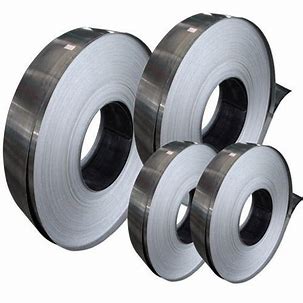
How the production route changes dimensional control, finish and mechanical behaviour.
Understand the process ↗
What to consider when abrasion, sliding contact or repeated forming affects service life.
Review the factors ↗Start with the finished part and the process that will make it. For example, a spring may need a different temper from a stamped bracket. Next, define the operating environment, including heat, moisture, chemicals and cleaning. Then, agree the strip thickness, width, edge and surface finish.
Detail matters because one small change can alter an entire production route. However, you do not need to know every answer before contacting us. A drawing, photo or current material specification is enough to begin a useful technical conversation. As a result, our team can identify the main decisions and the information needed for a reliable quotation.
First, name the part and its job. Then, note the heat, moisture and chemical contact. Next, describe how the strip will be cut, bent or welded. Also state the expected annual volume. Finally, list the test and packing needs.
Each answer helps our team compare options. Clear details also reduce follow-up work and shorten the quotation cycle. As a result, your team gets a more useful response. For wider context, review the World Stainless Association technical resources while preparing the specification.
First, confirm the finished product form. Next, confirm the edge and surface. Then, confirm the coil size and packing. In addition, confirm the test plan and document needs. In short, a clear brief keeps the quote focused on the right material.
Similarly, clear material data helps both teams compare options. In addition, it supports a faster technical review.
First, define the service environment and the way you will form the part. For example, 301 can suit a spring, while 316L can suit a chloride-bearing application. Next, compare the required strength, weldability and finish. Because each grade behaves differently, test a trial quantity when the design is critical.
Start with the finished-part tolerance, then work back to a practical strip tolerance. In most cases, a clear target and measurement method matter more than an unnecessarily tight value. However, a press line with narrow process limits may need a tighter specification and more frequent inspection.
Yes. We can review narrow slit widths against the master coil, thickness, edge and annual volume. In addition, the requested coil weight and inner diameter should match your handling equipment. As a result, the finished coil can move through your line with fewer changes and less waste.
Choose a finish for the visible surface and the downstream process. For example, BA may suit a bright visible part, while a 2B surface can support other forming and finishing steps. Also confirm cleaning, coating and inspection needs before you approve the surface.
Where the requirement allows, a sample or trial quantity can help connect the material data to actual forming or sealing performance. Share the drawing, target process and expected volume first. Then, our team can confirm what can be reviewed and how the result should be measured.
Include the grade or application, thickness, width, temper, surface, edge, tolerance and annual quantity. In addition, state the delivery location and any required documents. Finally, attach a drawing or sample photo. Clear input lets our team respond with fewer follow-up questions.
Include grade or application, thickness, width, temper, surface, tolerance and estimated quantity. A drawing or sample photo helps us respond with more relevant guidance.